What Boerne’s 2021 Plumbing Code Means for Sewer, Leak, and Water Heater Services
If you own a home or manage a property in Boerne, plumbing work is not just a matter of fixing what is broken and moving on. The city has formal permitting and code-compliance oversight for plumbing work, along with mechanical, fuel gas, and energy work. Boerne also uses the 2021 International Plumbing Code and related 2021 ICC codes. That matters more than many people realize, especially when the job involves a sewer line, a hidden leak, or a water heater replacement.
On the surface, code adoption can sound abstract, like paperwork that lives in a city office and never reaches your kitchen, yard, or utility bill. In practice, code shapes how plumbing work gets planned, installed, inspected, and documented. It affects who is allowed to do the work, when permits are required, what kind of follow-up may be needed, and whether a repair holds up over time.
I have seen homeowners focus on the immediate problem, which is completely understandable. The bathtub backs up, the water bill spikes, or the water heater gives out on a cold morning, and the only thing that seems to matter is speed. Speed does matter. But in Boerne, speed and compliance need to travel together. When they do, the job is usually smoother. When they do not, people often end up paying twice, first for the repair and then for the correction.
Why Boerne’s 2021 code adoption changes the conversation
The most important takeaway is simple. Boerne has a current code framework in place, and the city oversees permits and compliance for plumbing work inside city limits. That means sewer repairs, leak repairs, and water heater work are not floating in a gray area. They sit inside a system with standards.
For homeowners, this changes how you should think about hiring. The old approach of asking whether someone can “just come out and fix it” is not enough. The better question is whether the work will be done by properly licensed plumbing professionals and handled in a way that fits city requirements. In Texas, plumbing work is regulated by the Texas State Board of Plumbing Examiners, and plumbing licenses renew annually. The state also makes an important distinction in who can perform work and who can offer and contract plumbing work to the public. A Journeyman Plumber may install, change, repair, service, or renovate plumbing under a Responsible Master Plumber. Responsible Click for more info Master Plumbers are the individuals licensed to offer and contract plumbing work to the public.
That sounds technical, but it has real consequences. If a company is selling plumbing services directly to the public, there needs to be proper licensing structure behind that work. In Boerne, contractor registration is also required for work in city limits. So when you are comparing bids, you are not just comparing price and arrival time. You are comparing whether the job is being approached through the proper legal and code channels.
This matters even more for plumbing categories that can become expensive very quickly, which is exactly where sewer, leak, and water heater services tend to land.
Sewer work is where hidden complexity shows up fast
A lot of people think of sewer service as one thing. In reality, it can mean several very different jobs. It may be cleaning a stoppage. It may be diagnosing a recurring blockage. It may be hydro jetting or snaking. It may be a repair. In larger or more involved situations, it may move into infrastructure concerns that connect with broader city standards.
Boerne’s public works specifications include sanitary sewer infrastructure and mechanical cleaning requirements. Even if a homeowner never reads those specifications, their existence tells you something important. Sewer-related work is taken seriously at the municipal level. The city has formal standards in this area, not casual guidelines.
That should influence how you view a sewer problem. A backed-up drain line is not just a nuisance. Depending on the cause, it may involve questions about cleaning methods, condition of the line, and whether a temporary clearing is being mistaken for a lasting fix. A cable or snake can restore flow in some cases. Hydro jetting may be offered in others. But the right method depends on what is actually happening in the line and what condition the piping is in. The code framework does not tell a homeowner which machine to use on a Tuesday afternoon, but it does reinforce the idea that sewer work should be handled as a professional discipline, not as guesswork.
I have watched this play out in the field many times. A property owner gets one drain backup, then another a month later, then starts hearing three different theories from three different people. One says roots. Another says grease. Another says old piping. The real problem in those situations is often not the lack of effort. It is the lack of a structured approach. In a city with active permitting and compliance, a serious sewer issue should push the conversation toward documented, accountable work rather than one-off improvisation.
That does not mean every sewer call turns into a major project. Most do not. It means that when the job crosses from simple maintenance into actual repair or replacement, the city’s code and permit environment becomes part of the picture. That is a good thing for property owners, because it creates a paper trail and a standard.
The leak you fix may affect more than the pipe
Leak repairs in Boerne carry a second layer of importance because they can affect not only the plumbing system but also the utility bill. The city’s utility rules allow a one-time water-usage adjustment for a plumbing leak if the customer’s water consumption is at least 50 percent above that customer’s yearly average. The customer must provide a repair bill or parts receipts. Sewer charges may also be adjusted in certain December through March leak cases.
That is one of those rules that can make a real difference for households, especially when a leak goes unnoticed for a billing cycle. People are often shocked by how quickly usage can climb. A small leak that runs constantly does not look dramatic, yet the bill can tell a harsher story than the pipe itself.
This is where documentation becomes just as important as the repair. If a leak qualifies for that one-time adjustment, the city will want proof that the issue was fixed. That is why the repair bill or receipts matter. A homeowner who patches something quietly but throws away the evidence may have a harder time pursuing the adjustment than someone who keeps clean records from the start.
Here is where practical judgment comes in. If you discover a leak and your first thought is, “I need a plumber near me right now,” that urgency makes sense. Just do not let urgency crowd out recordkeeping. Save the invoice. Save the parts receipts if it is a legitimate owner-handled repair. Track the abnormal usage. Make notes on when the leak was found and when it was corrected. Those small habits can be worth real money.
The seasonal piece of the sewer adjustment rule is also worth noticing. The city allows sewer charge adjustments in certain leak cases during December through March. That is not a broad promise that every leak gets every charge reduced. It is a narrower rule with conditions. The lesson is not to assume relief, but to understand that Boerne has a defined process and that timing can matter.
Water heater jobs are rarely “simple swaps”
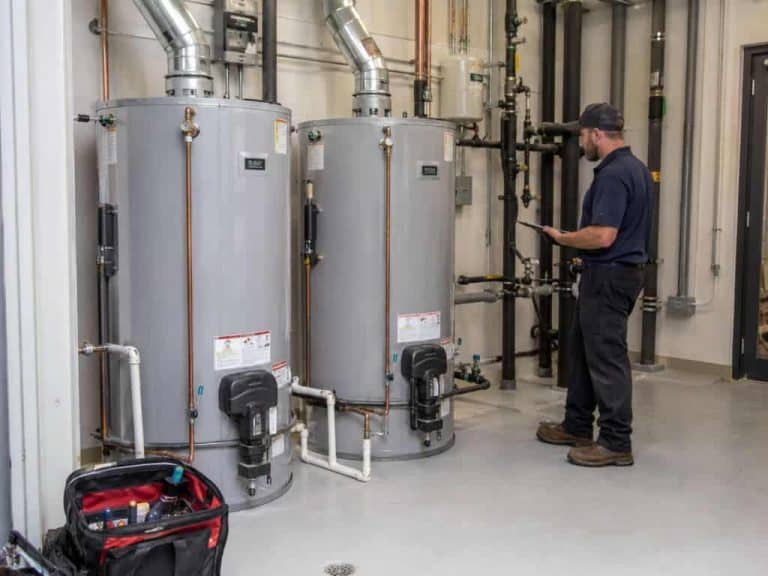
Water heater work is one of the most commonly underestimated plumbing jobs. Homeowners often describe it as replacing a box with another box. In reality, water heater installation or replacement sits right at the intersection of plumbing rules and, depending on the unit and setup, may also touch mechanical, fuel gas, or energy oversight. In Boerne, the city’s code-compliance authority includes those categories as well.
That alone should make people pause before treating a water heater replacement like an off-the-books errand. Even if the old unit and new unit look similar, the work still belongs inside a regulated system. The city issues permits for residential and commercial projects, and that tells you the expectation is formal compliance, not casual substitution.
Why does that matter to a homeowner who just wants hot water back? Because water heaters are not isolated appliances. They connect to your water system, and in some cases to fuel gas systems. They involve installation conditions that can affect safety, service life, and future inspections. A rushed replacement that skips permit and code requirements may work for a while, but that does not make it sound work.
I have seen people make decisions here based entirely on the first quote they get. The least expensive number on the page can be tempting when a water heater fails unexpectedly. But a proper comparison should include more than equipment cost. It should ask whether the contractor is properly registered for city work, whether the plumbing license structure is in order, whether the job will be permitted if required, and whether the installation is being treated as compliant work rather than a drop-in shortcut.
That does not mean the most expensive quote is automatically the best one. It means the cheapest option is only truly cheap if it solves the problem without creating the next one.
Permits are not just a city formality
Property owners often have mixed feelings about permits. They can sound like delay, extra cost, or red tape. Sometimes people worry that pulling a permit will turn a one-day repair into a drawn-out process. In practice, permits often do something much more useful. They force clarity.
A permitted job usually answers key questions upfront. What work is being done? Who is responsible for it? Does the contractor have the proper standing to perform work in city limits? Is the work likely to be inspected? Those are healthy questions for sewer, leak, and water heater work because these are the kinds of repairs that can affect property condition, future resale conversations, and utility documentation.
Boerne’s system makes clear that the city handles permitting and code compliance for both residential and commercial projects, and that contractor registration is required for work within city limits. That should reassure property owners more than it irritates them. A city that has rules and enforces them is giving you a framework for accountability.
There is also a more practical side. When work is done under the proper structure, disputes tend to be easier to sort out. If there is confusion about scope, documentation, or the nature of the repair, there is at least a defined path rather than a handshake and a disappearing phone number.
How this affects commercial properties too
Commercial plumbing work in Boerne sits under the same general umbrella of city permitting and code compliance. The stakes can be higher because downtime costs more and plumbing systems often serve more people, more fixtures, and more complicated layouts. A sewer issue in a commercial setting may affect operations immediately. A leak may impact usage costs more sharply. A water heater problem may interrupt service for customers, tenants, or staff.
The basic lesson remains the same. In a city using the 2021 International Plumbing Code and related ICC codes, and requiring contractor registration for work in city limits, commercial owners and managers should treat plumbing jobs as regulated building work, not just maintenance errands. That is especially true when a repair begins as “just service” but starts to look more like replacement, rework, or infrastructure involvement.
What homeowners should ask before saying yes
You do not need to become a code expert to protect yourself. You just need to ask a few grounded questions before the work begins. The answers can reveal a lot about whether the job is being handled professionally and whether the company understands Boerne’s local requirements.
- Are you properly licensed through the state to perform and contract plumbing work as required in Texas?
- Are you registered to work in Boerne city limits?
- Will this job require a permit, and if so, who is pulling it?
- If this leak affects my bill, what documentation will I receive for the repair?
- If this sewer issue is likely to return, what is the long-term fix versus the temporary clearing?
Those questions are not confrontational. Good contractors hear them all the time. In fact, solid professionals usually appreciate them because they separate serious customers from people shopping only on the lowest number.
The real-world difference between a quick fix and a code-minded repair
One thing the 2021 code environment does not do is magically remove judgment calls. Two plumbers can look at the same problem and recommend different approaches, especially with sewer cleaning methods or whether a water heater should be repaired or replaced. Code does not erase professional discretion. What it does is set a floor under the work.
That floor matters. It keeps the conversation anchored in standards rather than convenience. It makes documentation more valuable. It supports the city’s ability to oversee work that affects health, safety, and infrastructure. For homeowners, it reduces the odds that a major plumbing repair turns into a casual transaction with no formal backing.
If you have ever had to revisit the same plumbing issue twice in one season, you know how frustrating that can be. The first invoice hurts. The second one feels personal. That is why compliance matters even to people who do not care about code language at all. The point is not to admire the rulebook. The point is to reduce bad outcomes.
Why this matters when searching for help fast
When a crisis hits, most people do what everyone does now. They search their phone for the fastest local option, often typing “plumber near me” and calling the first company that answers. There is nothing wrong with starting there. The problem comes when the search ends there.
Boerne’s code and permit structure gives you a better filter. Local availability matters, but so do licensing, contractor registration, city compliance, and documentation. That is true whether the job is a sewer cleaning, a leak repair tied to a billing adjustment, or a water heater replacement that may involve multiple code categories under city oversight.
Fast service is valuable. So is legitimate service. The best plumbing calls are the ones where you get both.
A practical way to think about Boerne’s 2021 plumbing landscape
Boerne’s use of the 2021 International Plumbing Code, along with its permit and code-compliance system, tells property owners one clear thing. Plumbing work in the city is expected to meet defined standards. That is not a burden when you look at it the right way. It is protection.
For sewer services, it means treating line cleaning and repair as serious work that may intersect with formal sanitary sewer standards. For leak services, it means understanding that fast repairs and good paperwork can both matter, especially if water consumption spikes high enough to qualify for the city’s one-time leak adjustment process. For water heater services, it means respecting the fact that replacement work sits within a broader regulated framework and should not be treated like an untracked swap.
Most homeowners do not need to memorize code books or utility rules. They do need to recognize the shape of the system they live in. In Boerne, that system is active, current, and specific. If you work with it instead of around it, you are more likely to end up with repairs that hold, paperwork that helps, and fewer expensive surprises later.